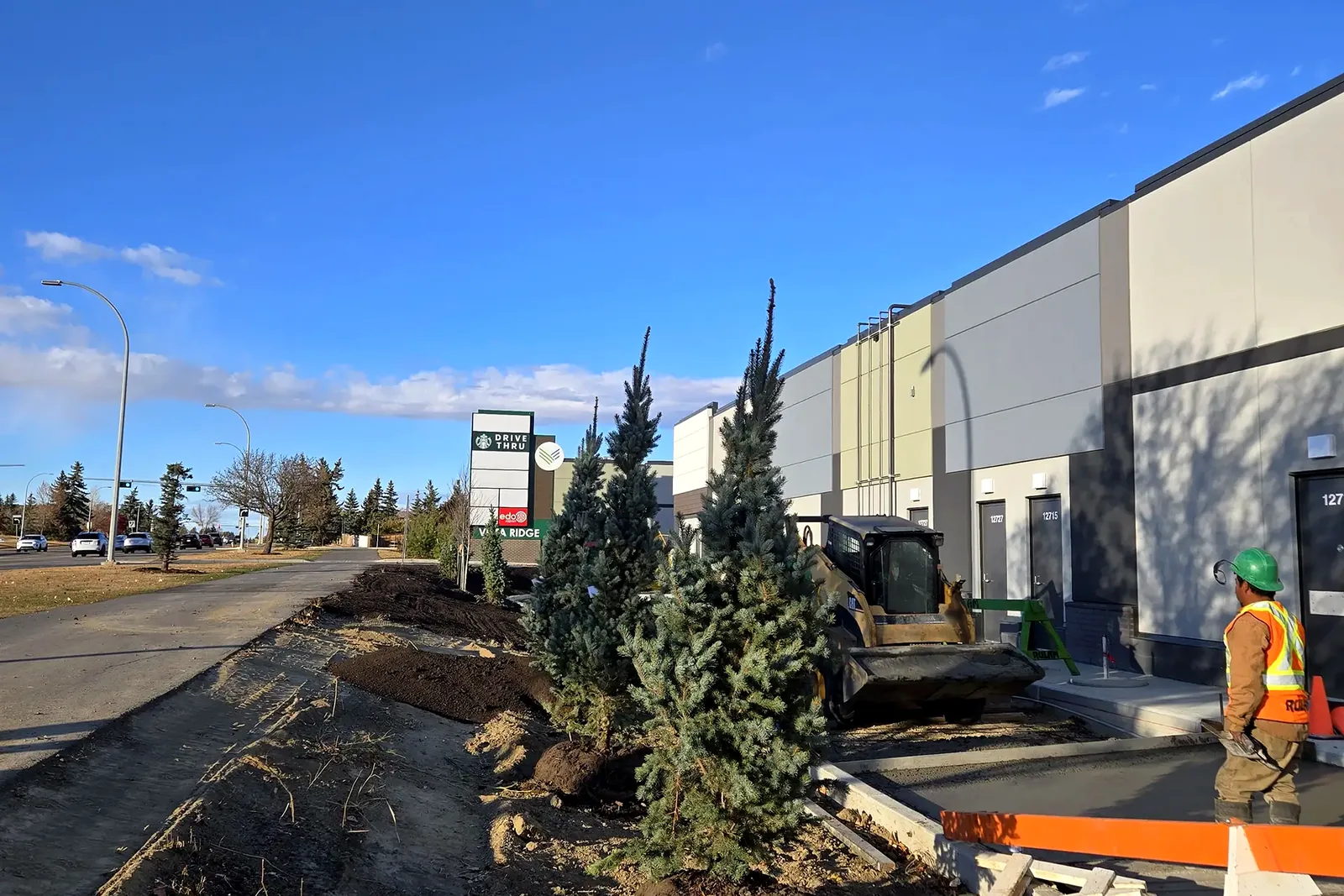
Ask any estimator what makes a subcontractor's bid a problem and they'll tell you the same thing: it's not the price, it's the holes. A number that looks sharp at tender but is missing scope, assumes another trade will finish the install, or ignores the site furniture on sheet L-4 — that's the bid that turns into change orders and finger-pointing three months later.
When a GC, developer, or owner sends us a landscape package, our job is to hand back a number they can carry into their own bid with confidence that the scope is actually covered. Here's exactly how we get there — the same process on every commercial and multi-family tender we price in Edmonton.
The short version: we price directly from your landscape drawings, every line is supply-and-install from start to finish, we scale anything that's missing in AutoCAD, we flag gaps before award, and we source the site furniture ourselves — so you get one complete number instead of a starting point you have to chase.
Our Tender Process, Step by Step
- We start from your landscape drawings. We price off the drawings issued by the GC, developer, or owner — the issued-for-tender set, the relevant spec sections, and any addenda. We work to what's specified, not to a generic package.
- We review the full scope, including site furniture. Softscape, hardscape, grading, and every site element on the drawings — benches, bike racks, planters, bollards, waste receptacles — gets accounted for, not skipped because it's "somebody else's line."
- Every item is priced supply-and-install. Each line is quoted from start to finish, materials and labour together. No material-only numbers, no assumptions that another trade closes it out.
- We take off the quantities in AutoCAD. Where the drawings give quantities, we verify them. Where they don't, we scale the drawings and calculate the areas and counts ourselves.
- We flag what's missing — during the bid. Missing quantities, undefined materials, or conflicts between the drawings and the spec get raised while we're pricing, not after award.
- We source specialty items with suppliers. We go straight to suppliers for site furniture and specialty products and fold supply-and-install pricing into the bid.
- You get one complete number. One landscape subcontractor, one price, full scope — instead of a bid you have to reconcile against three other quotes.
The rest of this article walks through why each of those steps matters to the person carrying the number.
We Price From the Drawings You Already Have
By the time a commercial project reaches tender, there's almost always a professionally engineered landscape drawing set — from the developer's design firm, the owner's consultant, or the GC's package. That's exactly what we want to price from. We review the landscape drawings and the site furniture schedule, and we build the estimate around the quantities and specifications the documents actually call for.
This matters because a bid is only as trustworthy as the scope behind it. When we quote, we're quoting the specified scope — not a rounded-off version of it, and not a cheaper substitute slipped in to win the number. If the drawings say a particular paver, a particular tree calliper, a particular wall system, that's what's in the price.
Every Line Is Supply-and-Install, Start to Finish
This is where a lot of landscape bids quietly fall apart. A "material-only" number looks competitive on the tender summary, but it leaves the GC holding the installation risk and coordinating a second party to actually put the work in the ground. Our estimates don't work that way.
Every item we price is supply-and-install, cradle to grave. Sod supplied and laid. Trees supplied, planted, staked, and watered in. Retaining walls supplied and built. Site furniture supplied and installed. When you read our line for an item, you're reading the full cost to have it finished on site — not a partial figure you'll have to top up later. That's the difference between a bid you can rely on and a bid you have to interrogate.
Missing Quantities? We Scale the Drawings Ourselves
Not every tender package is complete. Sometimes quantities are missing. Sometimes the drawings are issued for pricing before the design is fully dimensioned. Sometimes there's simply no takeoff provided and the GC is hoping the trades will figure it out.
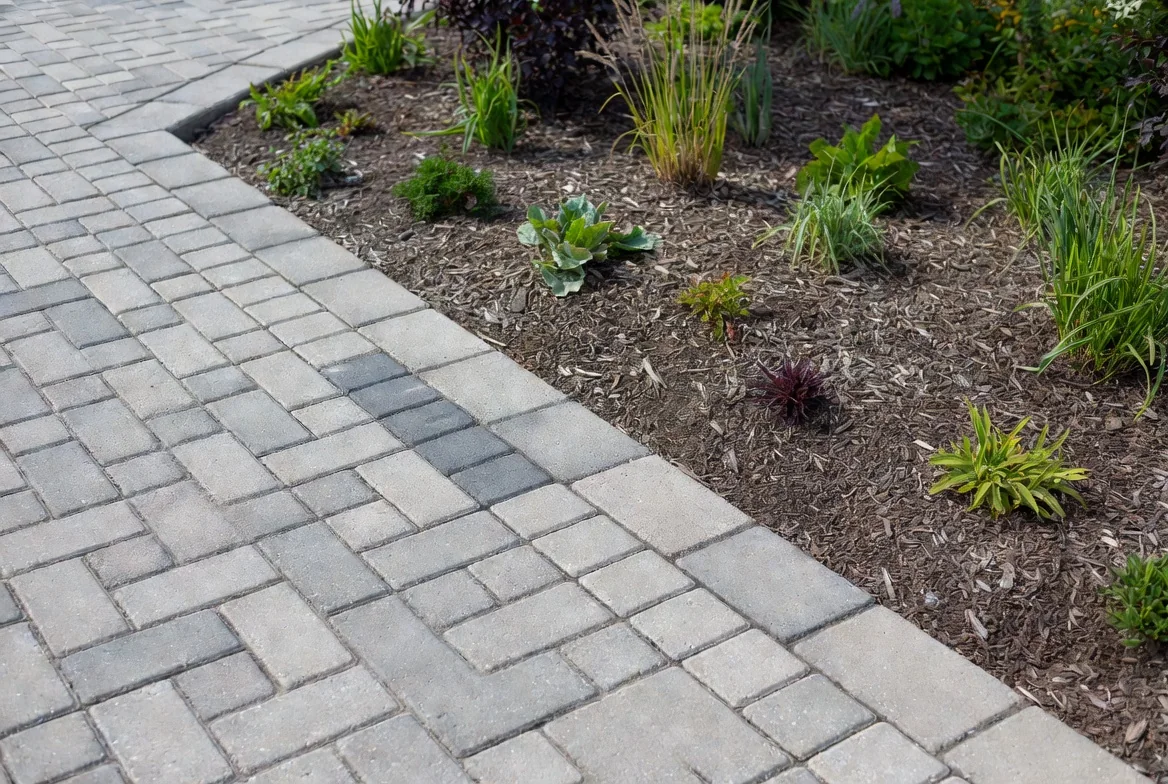
We figure it out. Owner Ryan Pon is a Landscape Architectural Technologist, which means we don't just wait for a number to be handed to us — we scale the drawings in AutoCAD and calculate the quantities ourselves. Square metres of sod and mulch, lineal feet of edging and walls, planting counts, hardscape areas — we generate the takeoff from the drawing itself.
For a GC or developer, that's a real advantage at two moments. First, at tender, it means you get a reliable budget number even when the documents are thin — no "TBD" line items, no allowances papering over a gap. Second, it surfaces missing scope early: when we scale a drawing and the quantities don't reconcile with what's listed, that's a flag worth raising before anyone's committed to a number.
We Flag What's Missing — Before It Becomes a Change Order
The most expensive words on a construction project are "that wasn't in our scope." We work to keep them out of the conversation entirely.
If, while we're pricing, we find a quantity that's missing, a material that isn't defined, or a spot where the drawings and the specification disagree, we notify the GC, developer, or client during the bid — not after the contract is awarded and the crews are mobilized. Sometimes that means asking for a clarification. Sometimes it means telling you what we've assumed and why. Either way, the gaps get dealt with up front, where they cost a phone call instead of a change order.
Why this matters to your estimator: a bid that flags its own gaps is worth more than a bid that hides them. You'd rather know about the missing quantity at tender than discover it when the invoice arrives — and that's exactly the point at which we raise it.
We Source Site Furniture and Specialty Items Too
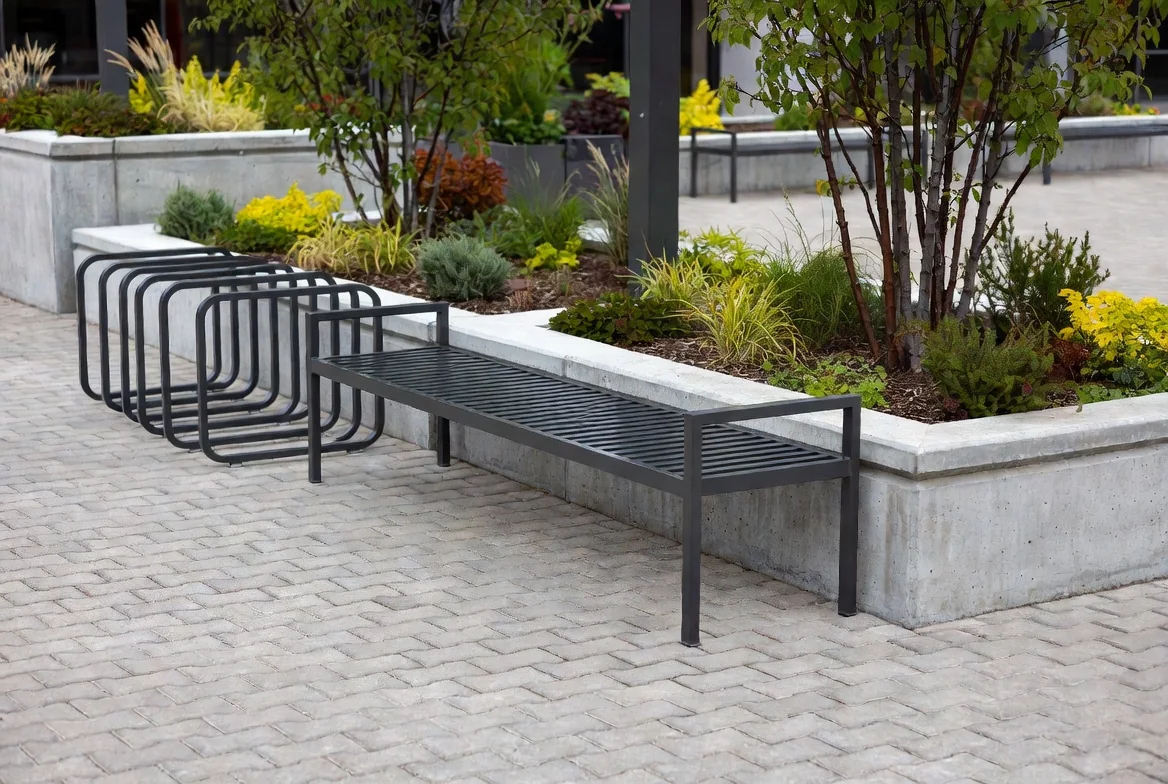
Site furniture is where a lot of landscape packages get fragmented. The benches, bike racks, planters, bollards, and waste receptacles on the drawings often come from specialty suppliers, and the default is for the GC to chase those vendors separately while the landscape sub prices only the "green" scope.
We don't hand that back to you. We contact the suppliers directly, get pricing on the specified site furniture, and quote it supply-and-install as part of our bid. If the drawings call for a specific product, we source that product; if they leave room, we can bring options. The result is that the GC coordinates one landscape subcontractor for the whole exterior package — hard, soft, and furniture — instead of stitching together three or four quotes.
The Result: A One-Stop-Shop Bid
Put all of that together and what you get is a single, complete, drawing-based number that covers the full landscape scope from grading to the last bolt on a bike rack. One subcontractor to prequalify, one bid to carry, one crew accountable on site, one warranty at the end.
That's the whole intent behind how we price: fewer parties, fewer gaps, less risk for the GC or developer carrying the project. When you hand our number up the chain, you're handing up a scope that's been read properly, taken off properly, and priced to finish — by a landscape professional, not a rough guess.
It's the same standard we describe in our commercial subcontractor capability overview, and it's why we ask commercial clients to bring us their drawings early. You can see the full picture of what we take on across commercial and multi-family work on our commercial services page.

More Than a Number: Value Engineering and Longevity
Because we read the drawings as a Landscape Architectural Technologist rather than just tallying a parts list, pricing a tender is also where we can add value beyond the bottom line. If we see a specified material that will struggle in an Edmonton Zone 3–4 winter, a detail that won't hold up under the site's drainage conditions, or a spec that's more expensive than it needs to be for the same result, we can flag it and offer an alternate — priced alongside the base bid so the GC or developer can compare.
We never silently substitute. The base number always reflects the specified scope. But offering a value-engineering option or a longevity note during the bid gives the client a choice they wouldn't otherwise have — a chance to protect the budget, or protect the finished project, before the contract is set. That's the kind of input a developer wants from a subcontractor they're about to trust with the exterior of a build, and it's another reason our bids are worth reading closely rather than just scanning the total.
What to Send Us to Get a Bid
To get a fast, accurate commercial landscape price from us, send:
- Landscape drawings and the relevant spec sections.
- The site furniture schedule or any specialty product specifications.
- The grading / drainage plan if grading or grade certificates are in scope.
- Any addenda issued to date.
- Your bid deadline — we work to your timeline.
Missing the quantities? Send the drawings anyway — that's exactly the situation our AutoCAD takeoffs are built for. Get in touch or call (780) 709-0358 and ask for Ryan to add us to your bid list or send a project to price.