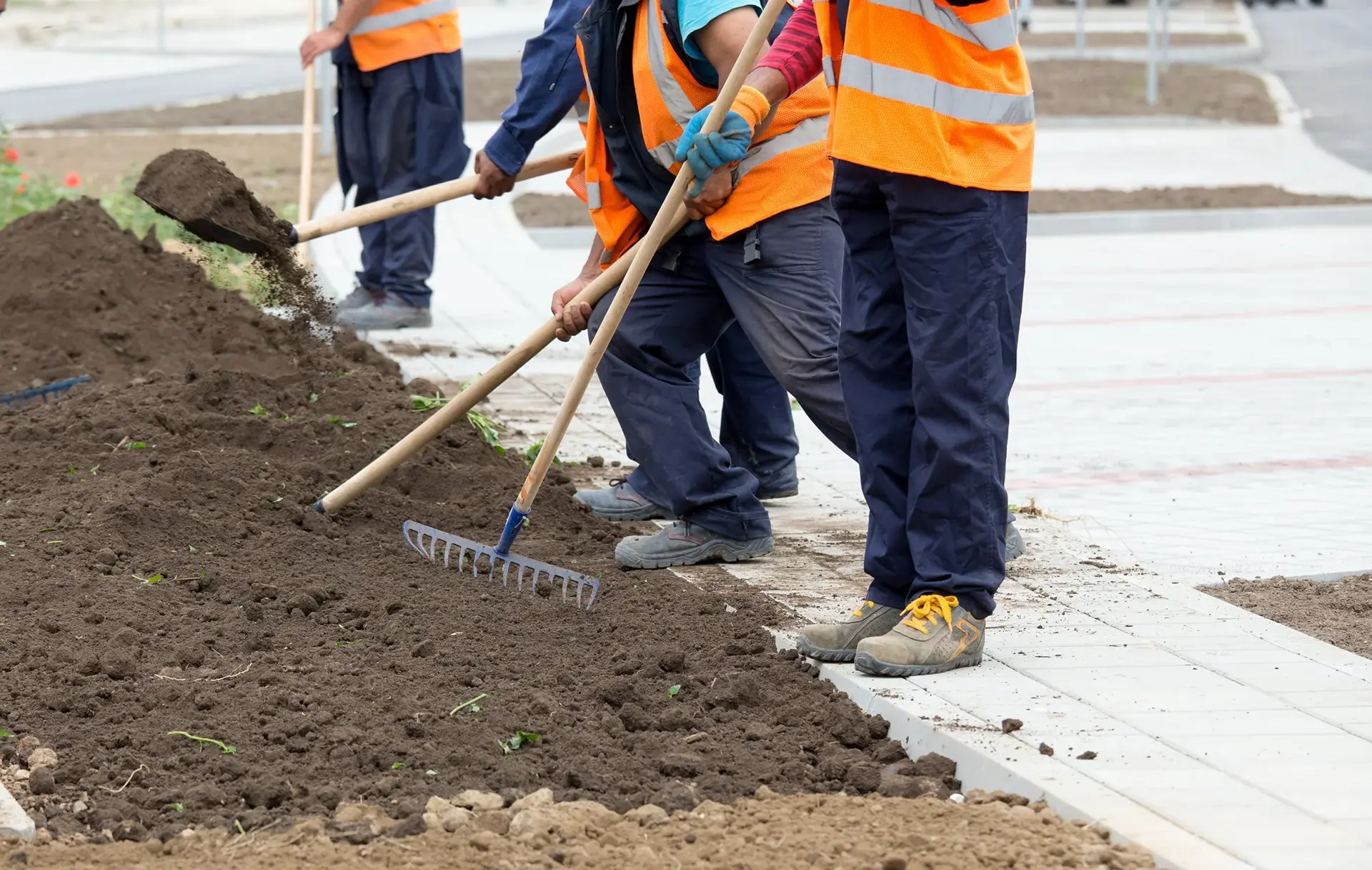
Hiring a professional landscaping company is a different experience than hiring a general handyman or doing the work yourself. Done right, it results in an outdoor space that looks intentional, drains properly, and holds up to Edmonton's climate for years. Done wrong — or with the wrong contractor — it results in wasted money, failed sod, and a yard that looks worse than when you started.
Here's what the process actually looks like when you work with a professional landscaping company, and how to make the most of it.
Step 1 — The Site Assessment
A professional landscaping company will always start with a site visit before quoting. This isn't a formality — it's essential. The contractor needs to assess your existing grade, soil conditions, drainage patterns, access points, and any constraints on the lot before they can give you an accurate scope and price.
Come to the site assessment prepared with:
- Your plot plan or survey (especially important for new builds)
- Any drainage concerns you've noticed (wet areas, erosion, ponding)
- A clear sense of what you want to use the space for
- Photos or examples of yards you like (even rough screenshots help)
- A realistic budget range — not a number you'll negotiate from, but an honest range so the contractor can scope the right solution
Step 2 — The Proposal and Quote
A professional quote should be line-by-line — not a single number. You should be able to see what you're paying for: topsoil depth, sod variety, materials, labour, equipment, and any subcontracted work (like inspection fees for grading certificates). If a contractor gives you a single-number quote with no breakdown, ask for a breakdown. If they won't provide one, that's a red flag.
Read the scope carefully. Make sure it covers:
- Grading approach and how drainage will be handled
- Topsoil specification (screened vs. unscreened, depth)
- Sod variety and installation method
- Any hardscape materials — specific brand and product name, not just "paving stone"
- What's included in cleanup and what the site will look like when they leave
Step 3 — Scheduling and Preparation
Once you've approved a quote and paid a deposit, you'll receive a scheduled work date. A few things to do before the crew arrives:
- Mark any underground utilities (call Alberta One-Call at 1-800-242-3447 — it's free and required)
- Ensure the crew has access to the property and any gates are unlocked
- Move any items out of work areas — furniture, kids' equipment, stored materials
- Confirm water access (crew will need it for mixing and irrigation setup)
- Let neighbours know work is happening, especially if equipment will be on the street
Step 4 — The Installation
On a standard residential landscaping project, expect:
- Day 1: Grading, topsoil spreading, and compaction. If hardscape is included, base preparation begins.
- Day 2: Sod installation or planting. Hardscape installation if in scope.
- Final day: Cleanup, edging, final inspection with the homeowner, and aftercare walkthrough.
You don't need to be home for the work to proceed, but a walkthrough at the end of the project is worth your time. This is your chance to confirm everything matches the scope and flag anything before the crew demobilizes.
Step 5 — Aftercare
The most common reason newly installed landscaping fails is inadequate aftercare — particularly watering. A professional company will walk you through the specific requirements for your installation. For sod, this means daily (sometimes twice daily) watering for the first two to three weeks. For plantings, it means establishing a regular watering schedule through the first growing season.
If something doesn't look right within the first few weeks — sod browning in sections, drainage pooling where it shouldn't, plantings wilting despite watering — contact your contractor immediately. Reputable companies will come back to assess and correct legitimate workmanship issues. Don't wait until the problem is severe.
What Sets a Professional Apart
The difference between a landscaping company and a crew with a truck and a sod roller comes down to a few things:
- Proper site assessment before quoting — not guessing from the street
- Written, line-item proposals — so you know what you're getting
- Knowledge of Edmonton's City requirements — grading standards, drainage compliance, permit thresholds
- Quality materials — screened topsoil, named sod varieties, branded paving products with known specifications
- Aftercare guidance — they don't just install and disappear
- Liability and WCB coverage — so you're not exposed if something goes wrong on your property